Dragon Age Inquisition in Unreal Engine 5 - The Crow Fens
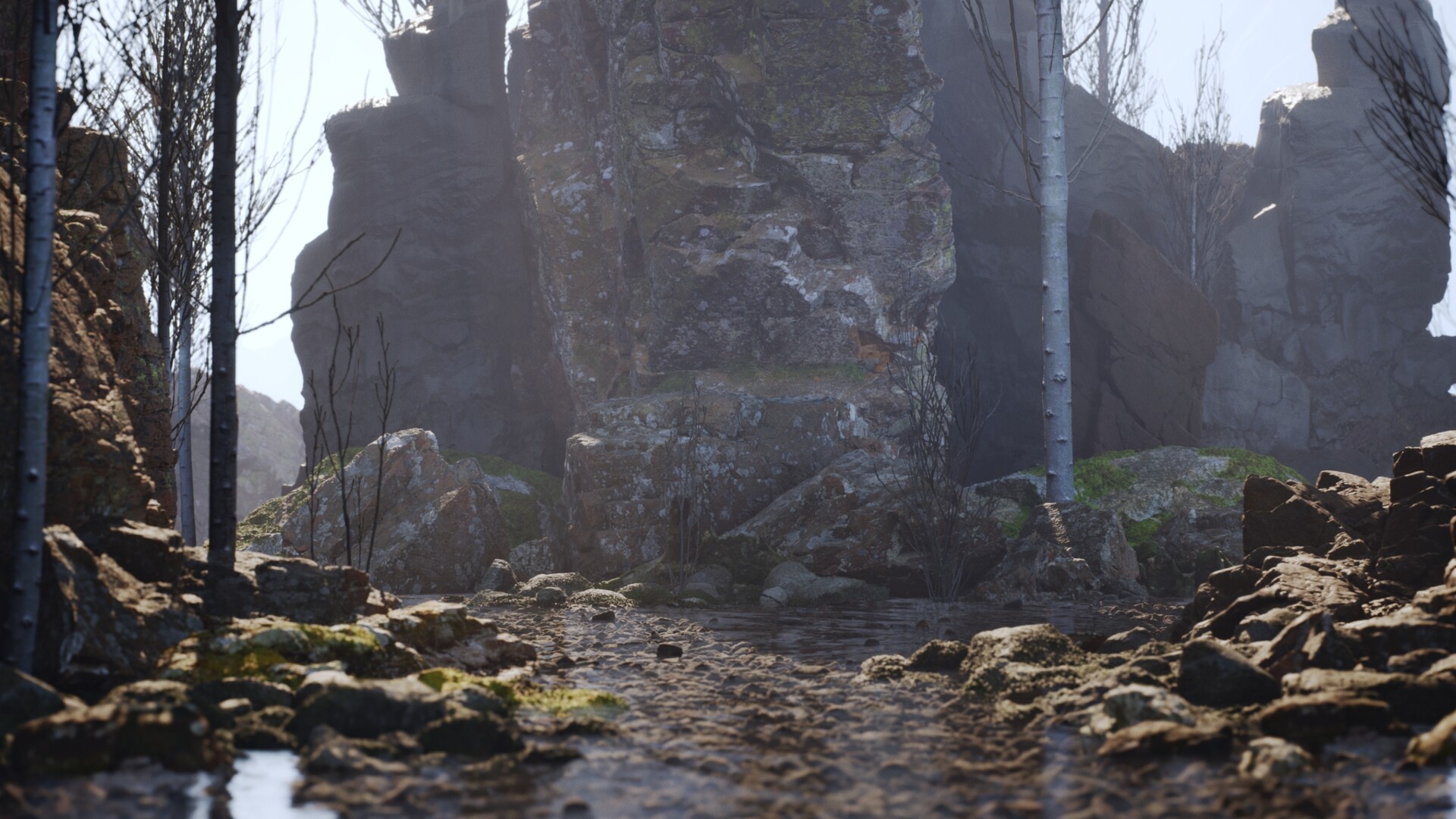
So here’s something a bit more adventurous – I’d always loved the environments in Dragon Age: Inquisition, so I thought I give it a go to create some cinematics from the concept art and level screenshots of the original game – this time with the full power of Unreal Engine 5.
In full fairness, Dragon Age: Inquisition came out in 2014, so obviously the technology for video game real-time graphics has developed substantially since then – and not to mention that it used an entirely different game engine (Frostbite 3). With that said, obviously the lighting, models etc… aren’t going to match up 100%, and with Nanite and Lumen – the whole look of the original scene isn’t exactly the same – but it wasn’t supposed to be. The aim for this little project was just to re-imagine what DA:I could have looked like with today’s graphical capabilities – to capture the mood and the essence of Bioware’s awesome environmental level design.
This entire scene was a part of the narrow canyon section in the Exalted Plains (The Crow Fens) – on the way to fight the Gamordan Stormrider. I loved the dramatic mood of that swamp level - although fighting that dragon in particular was a PAIN. Lighting breathing dragon + water filled swamp? Yeesh.
***
For the more technical side of things, almost all of this scene was kitbashed together using full quality Nanite Quixel Megascans assets – with the exception to the trees (done in Blender Sapling Gen), the animated water and the mountain in the background. Nanite is great – this level of complexity would never have been possible in UE4 – although as a caveat, at nearly 1GB per model – this scene is HUGE. If this any indication, future games done in UE5 are certainly going to be hard on the SSDs.
This scene was 100% dynamic – no light bakes. Just Lumen working its magic. The most difficult part of this whole thing was the reflections however – a planar reflection was used although it had to be constantly adjusted depending on the angle of the camera which was a bit of a pain. This is an area where I think ray-traced reflections are still king. But given that this whole scene was running at full quality on the cinematic preset at around 25-30fps on a single 1060 Max-Q, 6GB VRAM – I’m not even mad.
The final export was done using the Movie Render Queue – at 2K resolution with temporal sampling bumped up to 32 to get a nice smooth image. So in this regard, it’s not truly ‘real-time’ – as it took around 3 hours to export out the whole sequence – I guess ‘real-time-adjacent’? Final colour grading was done in Davinci Resolve 17.



Lighting Pass

Lumen Pass (GI)

Lighting Pass

Lumen Pass (GI)